01
Knowledge
How a system gathers, organizes and interprets the information available to it.

Complex adaptive systems · Organizational sciences
Deep Order Technologies applies a fourfold mathematics of Knowledge, Presence, Harmony and Power to help teams and organizations recognize patterns, test possibilities and make more resilient decisions.

One inquiry · Four connected paths
Deep Order Technologies explores one central question: how can organizations become more perceptive, adaptive and capable of creating the future? Each part of the site approaches that question from a different—and necessary—direction.
Follow Dr. Pravir Malik’s decades-long inquiry into what the future organization is and how to get there.
Explore the inquiry → 02 · ApplyFollow the progression from early experimentation and validation at Stanford University Medical Center to organizational journeys at Zappos and Nucor.
Explore the journeys → 03 · SenseDevelop human and analytical intelligence for recognizing present dynamics and emerging trajectories.
Explore analytics → 04 · DevelopBuild leaders’ systems capacity through organizational sciences, EQ and the perceptual power of Light.
Explore the program →Where the paths converge
Consulting brings the inquiry, applied experience, analytics and leadership development together around the system—and the consequential question—in front of you.
Explore consulting ↓Organizational sciences consulting
A complex adaptive system consists of diverse and autonomous agents that are interrelated, interdependent and linked through dense connections. Together, they learn from experience and adjust—not merely react—to changes in their environment.
An organization is such a system. Its outcomes arise from patterns of interaction across individuals, teams, structures, customers and markets. Small changes can produce large effects, and new order can emerge without being centrally designed.
Organizational sciences consulting asks how that living system senses, learns, coordinates and evolves—then helps leaders identify where meaningful movement can begin.
Authenticity, perception and agency
Relationships, learning and coordination
Culture, structure and shared purpose
Adaptation, emergence and co-evolution
The fourfold lens
Stable complex systems are not static. They continually sense, interpret, coordinate and act. The fourfold framework makes those dynamics visible and gives leaders a practical language for working with them.
How a system gathers, organizes and interprets the information available to it.
How clearly a system perceives its current state, context and emerging conditions.
How relationships, flows and priorities align across the whole system.
How insight becomes coordinated movement, adaptation and durable change.
The consulting journey
Every engagement begins with the system as it is—not a generic transformation formula. Together, we identify the patterns that matter and shape interventions the organization can carry forward.
Map the present system: its purpose, relationships, recurring patterns and sources of tension.
Use complex adaptive systems and the fourfold lens to reveal new choices and leverage points.
Translate insight into experiments, practices and decision structures that build lasting capacity.
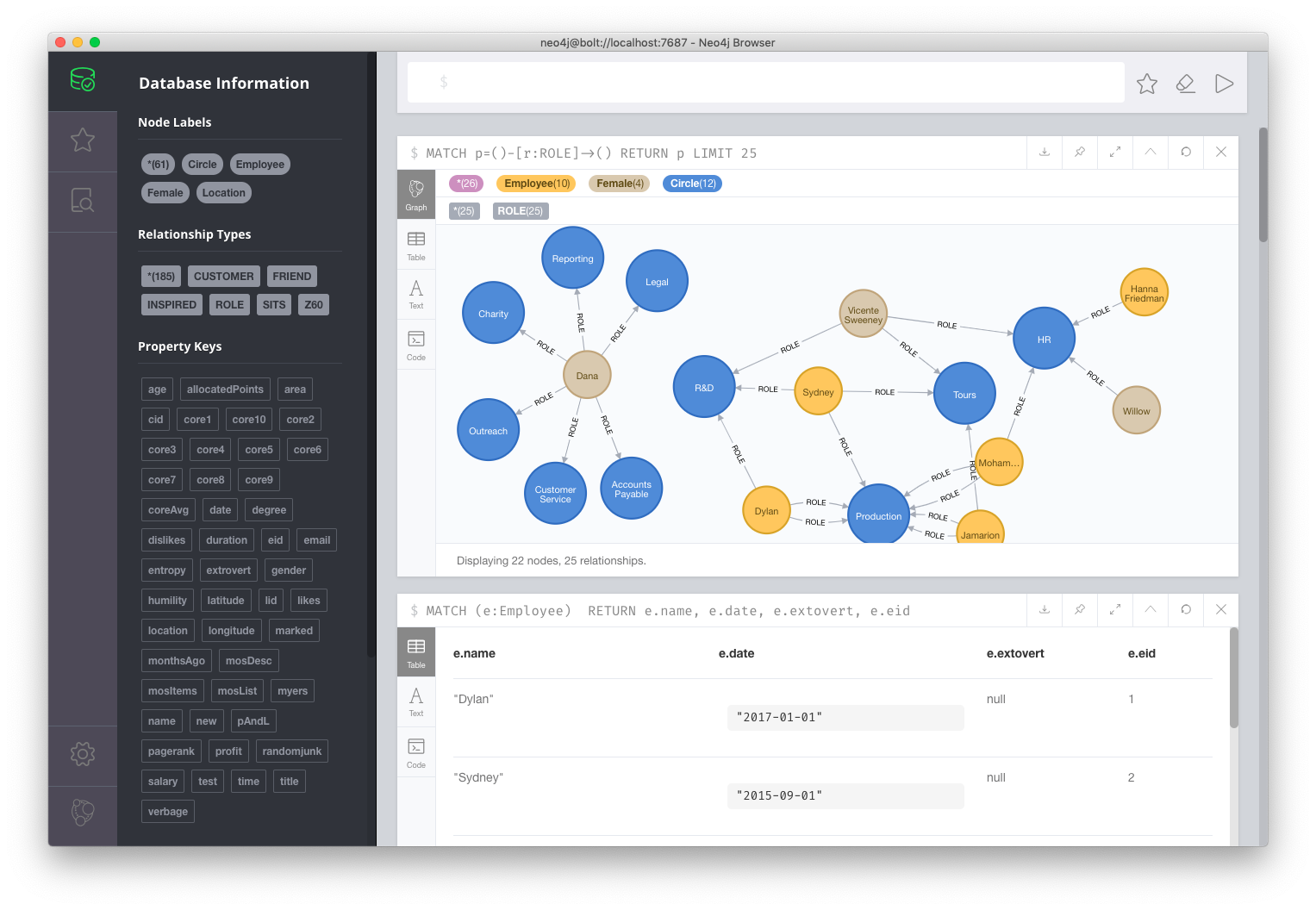
Relationships and patterns become actionable when they can be seen, modeled and tested.
Fourfold analytics
Fourfold analytics extends the consulting lens through pattern recognition, mathematical modeling and simulation. It makes relationships visible, tests possible trajectories and helps leaders examine how a complex system may respond before consequential choices are made.
Explore fourfold analyticsThe fractal nature of CAS
Each agent of a complex adaptive system is itself a complex adaptive system. An individual sits within a team, a team within an organization, and an organization within a market and society.
Durable change therefore cannot be confined to one layer. Individual development, team dynamics, organizational structures and market relationships must reinforce one another.
A deeper mathematical framework
The fourfold approach is grounded in a mathematical framework developed to describe recurring dynamics within complex adaptive systems. It connects conceptual insight with algorithms, simulations and decision tools.
The aim is practical: to help organizations see more of the system they are in and make choices that remain coherent as conditions change.
Follow the framework into the Future Organization inquiry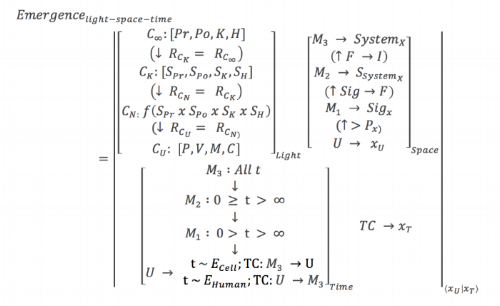
Start with the system in front of you
Begin a conversation about the patterns, decisions or organizational dynamics you are working through.
Start a conversation